
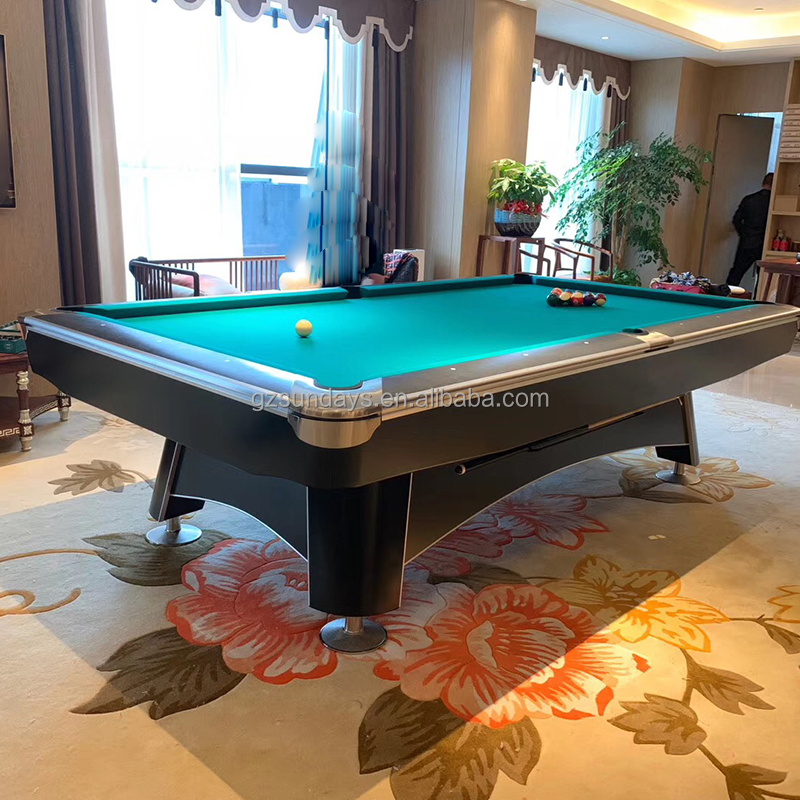
Pocket geometry changes the game
Chinese 8-ball tables typically use rounded pocket openings associated with snooker-style geometry. American pool tables commonly use angled pocket facings and pocket dimensions designed around American pool disciplines.
Ask for drawings or close photographs of corner and side pockets. The product name alone is not enough to confirm the playing standard.
Cloth and cushion response are different
Chinese 8-ball commonly uses a directional, faster cloth style that rewards precise positional control. American pool tables often use a worsted or napped cloth selected for the target market and venue.
Cushion profile, rubber and rail construction must be matched to the balls and pocket system. Request these details for the exact model under quotation.
Size and balls should be specified together
Nine-foot tables are common in both premium American pool and Chinese 8-ball, but equal nominal size does not mean equal playing specification. Ball diameter and weight must suit the chosen discipline.
If the table will be used in a tournament, league or branded venue, include the governing playing standard in the RFQ.
- Nominal table size and actual playing area
- Ball diameter and set type
- Corner and side-pocket geometry
- Cloth and cushion specification
Which table should a buyer choose?
Choose Chinese 8-ball when the venue or market specifically serves that discipline and expects its pocket and cloth behavior. Choose an American pool platform for markets focused on 8-ball, 9-ball or 10-ball under American-style table expectations.
Distributors serving several customer groups may need separate models. Avoid marketing one generic table as both formats unless the manufacturer documents the configuration differences.