
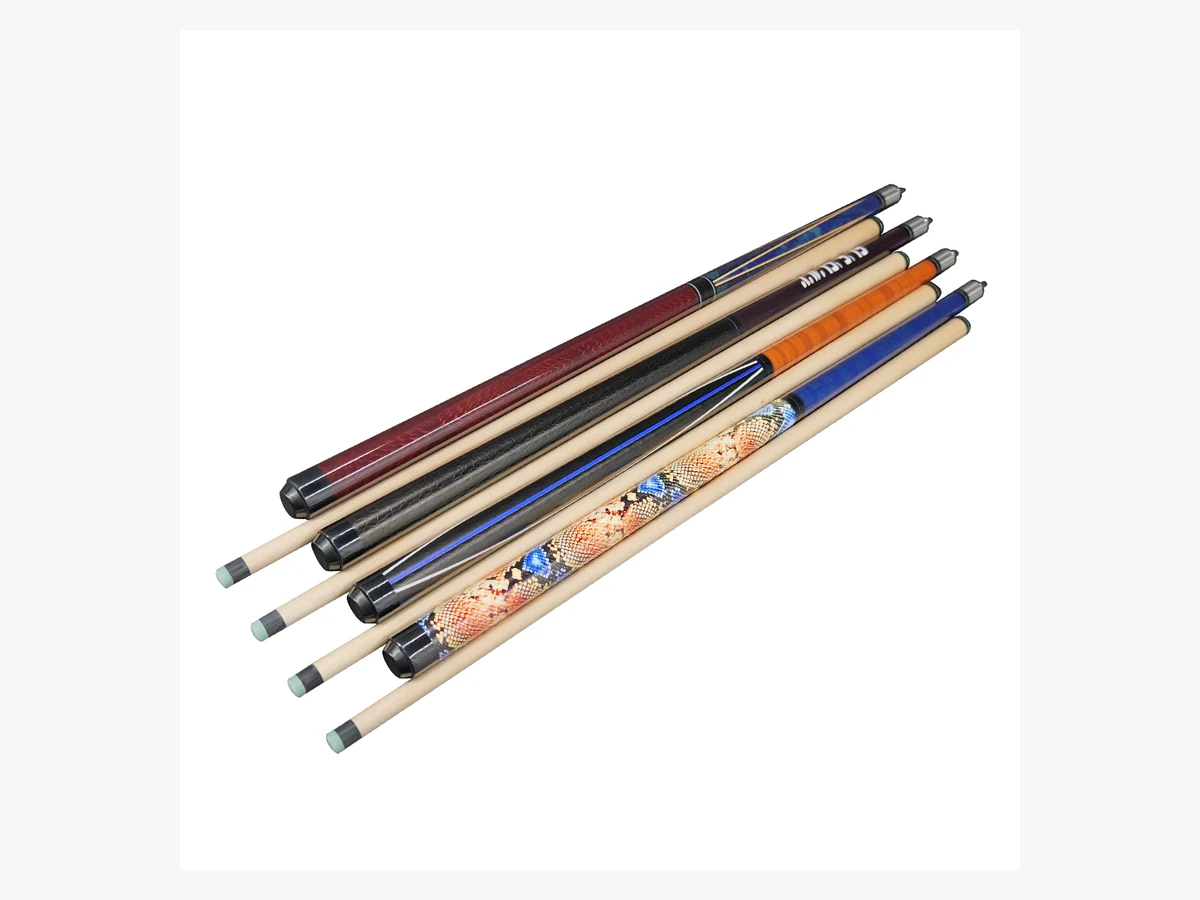
Jump Break Cue Buying Guide for Clubs and Dealers
A useful jump break cue must separate reliably, deliver repeatable impact and comply with the rules used by the buyer’s players. Specify the playing market and service expectations before comparing finish or price.
Compare the practical options
| Break function | Weight, balance, shaft stiffness and tip must support controlled power |
|---|---|
| Jump function | Quick-release configuration and legal equipment rules must be checked |
| Club or dealer program | Prioritize replaceable parts, batch consistency and clear warranty handling |
Specification checklist
- Overall and section lengths
- Joint type and thread
- Shaft material and taper
- Tip material, hardness and diameter
- Weight range and balance
- Case, spare parts and packing
The mistake buyers should avoid
A dramatic break test is not a complete quality test. Check straightness, joint fit, finish, tip installation, repeatability and replacement-part availability across the supplied batch.
Build a comparable supplier request
Send the exact use case, required quantity, destination, preferred specification, branding, packing and required date. Ask the supplier to separate standard features from options and to identify every value that still needs approval.
For wholesale programs, request one named specification for each functional variant. Do not create duplicate catalogue records by changing only color words. Keep the approved sample, quotation and packing record linked to the same product name.
Browse the related product range: Cue and accessory buying center →
Evidence boundary
This original buyer guide is based on the reviewed Sundays product records and common procurement fields. Final compatibility, performance, materials, dimensions, MOQ, price, packing and delivery are confirmed in the written quotation.
Reviewed November 16, 2026.