
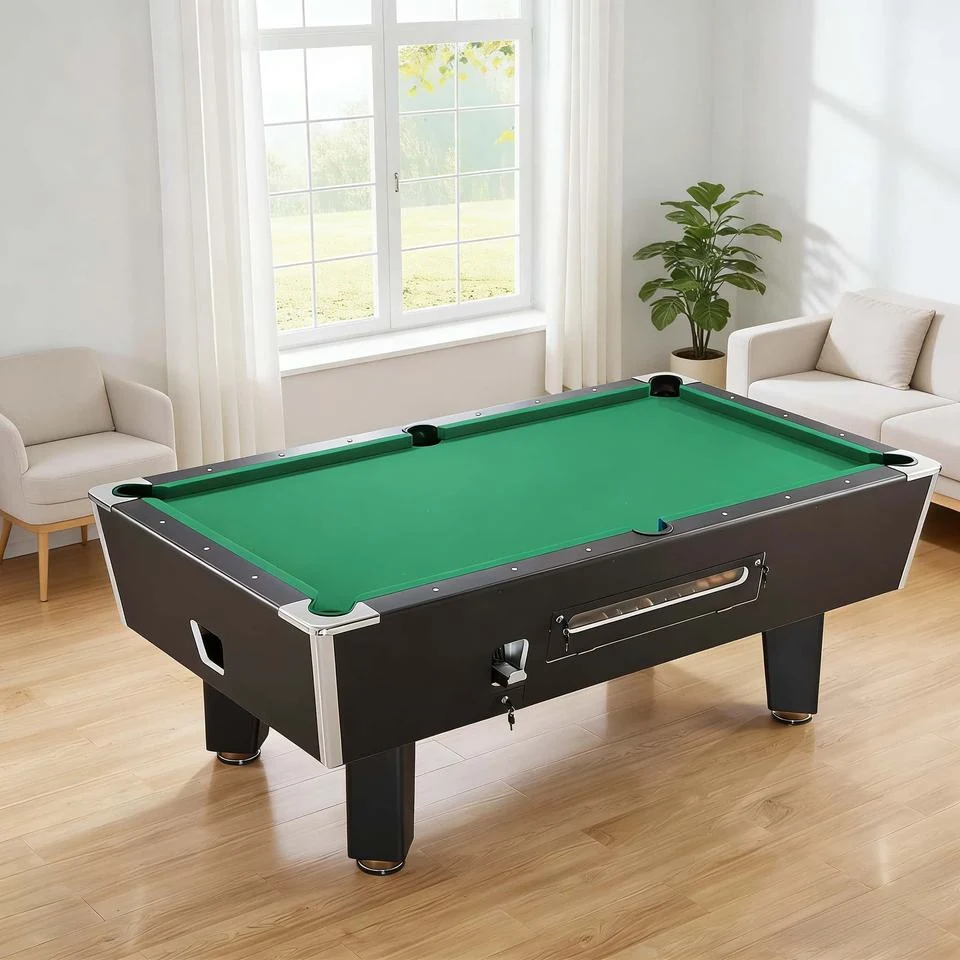
How does a pool table return the cue ball?
Gravity moves pocketed balls through internal channels to a tray. A cue-ball separator then diverts the cue ball to a different outlet so play can continue after a scratch. Depending on the table, separation may use an oversized cue ball, a different weight or a magnetic cue ball. The correct ball must match the exact return system.
Ball return path, step by step
Linings and channel angles reduce impact and keep balls moving, while accessible panels allow debris or a jam to be cleared. Exact construction differs between drop-pocket, automatic-return and coin-operated tables.
Three common cue-ball separation methods
| Method | How it separates the cue ball | Buyer check |
|---|---|---|
| Oversize cue ball | A size-sensitive gate sends the larger cue ball to another path. | Confirm diameter and replacement availability. |
| Weight-sensitive system | A mechanism reacts differently to the specified cue-ball weight. | Confirm the exact compatible ball set. |
| Magnetic cue ball | A magnetic component redirects the marked cue ball. | Confirm the magnetic cue ball is included and locally replaceable. |
Not every table uses every method. Request the actual separator description and service diagram for the model being purchased.
Why a cue ball does not return correctly
- The wrong cue-ball size, weight or magnetic specification is being used.
- Chalk, cloth fibers, debris or a damaged liner obstructs the channel.
- The table is not level enough for reliable gravity travel.
- A gate, sensor, guide or access panel has shifted or been damaged.
- Balls are dirty, worn or outside the mechanism tolerance.
Stop forcing tools through a hidden channel. Follow the model service route, isolate electrical or coin components where applicable, and use a qualified technician when the cause is not visible.
What a commercial buyer should ask for
- A diagram or video of the full ball path.
- The cue-ball separation method and compatible ball specification.
- Jam-clearance and cleaning access without major disassembly.
- Tray capacity, noise-control lining and replaceable wear parts.
- Coin, token or free-play behavior for the selected configuration.
- Spare gates, liners, sensors or magnets recommended for the installed quantity.
Compare return-system table options
Review a compact 7 ft automatic ball return pool table, the GTC001 7 ft / 8 ft coin-operated table and the Sundays 5G 9 ft automatic ball return table. Product photographs do not confirm the internal mechanism; request the written specification.
Copy this technical question
“For model ___, please confirm the complete ball-return path, cue-ball separation method, compatible cue-ball specification, service access, included spare parts, payment mode, quantity and packed dimensions.”
What this page can—and cannot—confirm
The system descriptions explain common engineering approaches. The exact separator, track and service access must be confirmed for the selected table.
- World Pool Association rules and equipment-specification library
- Sundays research, product-data and corrections policy
Reviewed 2026-10-30. Order-specific dimensions, materials, packing, MOQ and lead time require a written quotation and approved specification.