
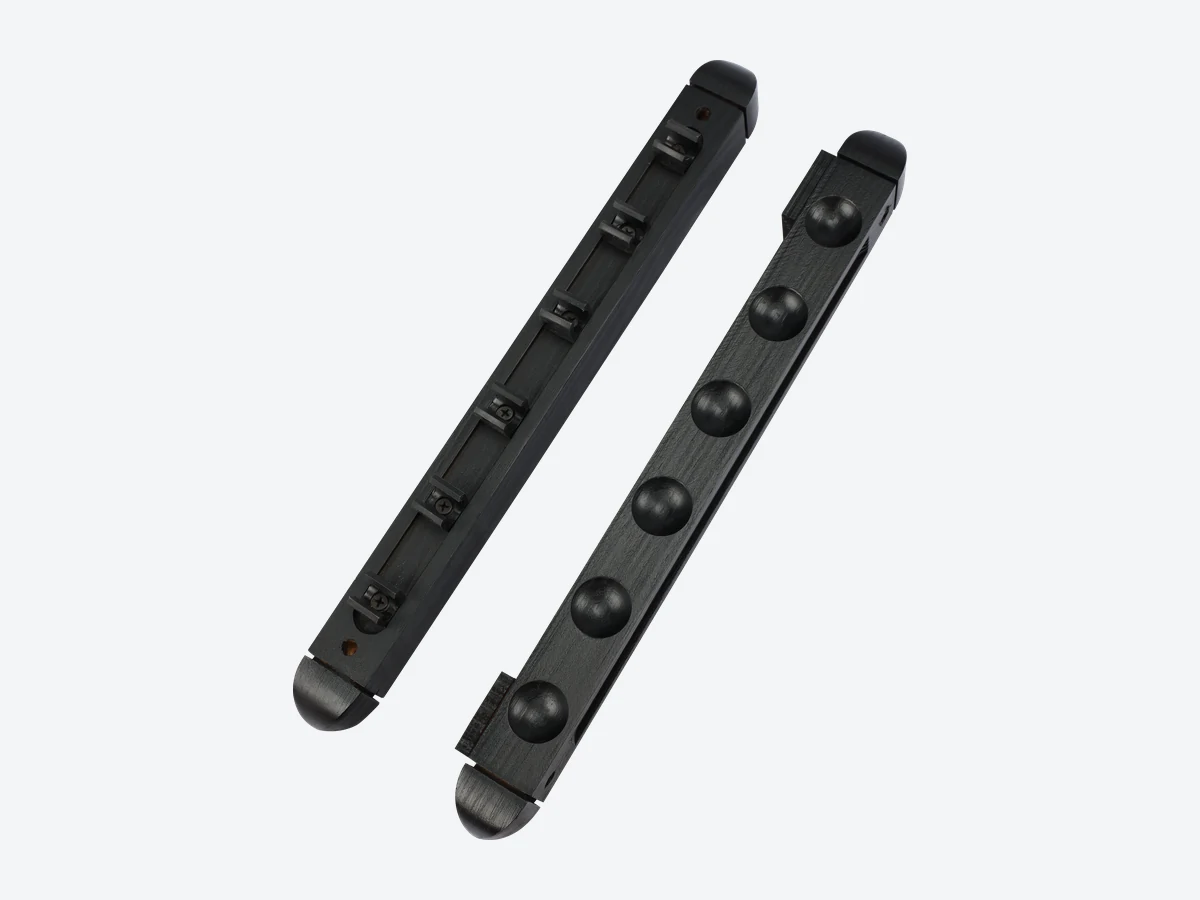
Wall-Mounted vs Floor Cue Rack: Which Fits a Pool Room?
Choose a wall rack when floor space is limited and the wall can support a level installation. Choose a floor rack when placement must remain flexible or wall fixing is unsuitable. In both cases, match the rack to cue length, capacity and traffic flow.
Compare the practical options
| Wall-mounted rack | Saves floor space; requires sound fixing and accurate vertical alignment |
|---|---|
| Floor rack | Flexible placement; consumes floor area and must resist tipping |
| Club storage | Needs numbered positions, easy inspection and separation from player circulation |
Specification checklist
- Real cue capacity
- Top-and-bottom support spacing
- Wall structure or anti-tip method
- Contact surfaces that protect shafts
- Clearance from doors, seating and radiators
- Hardware, assembly and packing
The mistake buyers should avoid
Mounting too close to a table or door creates cue damage and player congestion. Draw the rack, cue length and removal path on the room plan before drilling or ordering.
Build a comparable supplier request
Send the exact use case, required quantity, destination, preferred specification, branding, packing and required date. Ask the supplier to separate standard features from options and to identify every value that still needs approval.
For wholesale programs, request one named specification for each functional variant. Do not create duplicate catalogue records by changing only color words. Keep the approved sample, quotation and packing record linked to the same product name.
Browse the related product range: Cue and accessory buying center →
Evidence boundary
This original buyer guide is based on the reviewed Sundays product records and common procurement fields. Final compatibility, performance, materials, dimensions, MOQ, price, packing and delivery are confirmed in the written quotation.
Reviewed November 16, 2026.